
Edge AI in 2025: Intelligence Where It Matters Most
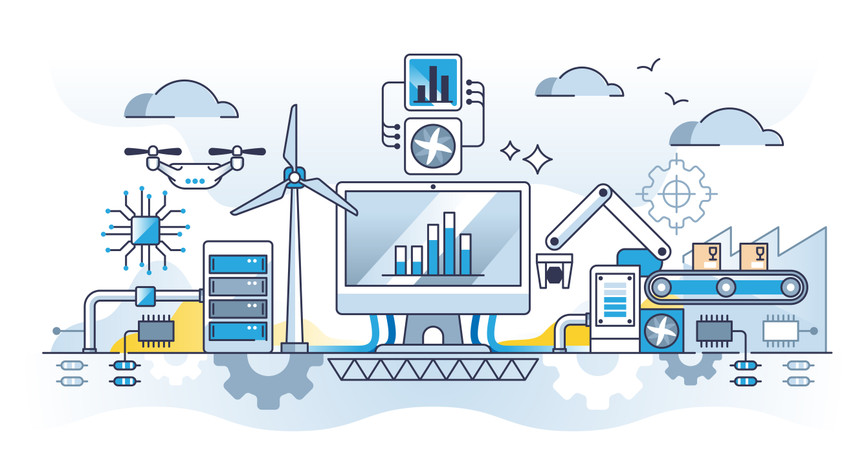
As 2025 comes to an end, artificial intelligence (AI) at the edge is redefining how organizations innovate, produce, deliver, and maintain products and services. For leaders, engineers, and innovators, edge AI represents new opportunity.
Many companies are moving quickly in response. In a recent edge AI adoption survey of 301 U.S. chief information officers, 97% said they have either implemented edge AI or have plans to do so. That makes sense because edge AI promises smarter efficiencies, greater automation, and stronger security.
From real-time quality checks on factory floors to vision systems in aerospace to threat detection in defense, edge AI has become essential wherever operations demand speed, reliability, and security. At the center of this evolution is edge AI itself, analyzing and acting on data where it’s generated, rather than relying on distant servers or cloud infrastructure.
These benefits are real, but they are only repeatable when the engineering foundations are sound. Edge AI demands disciplined approaches, beginning with design through lifecycle management. Standards-based design and rugged hardware solutions turn those promises into dependable outcomes.
Technology Enablers Driving Edge AI Hardware Design
The challenge is how to harness the AI momentum in ways that turn innovation into scalable, reliable performance. That comes down to advances across hardware, software, and machine learning models (MLMs).
Hardware. More capable processors, microcontrollers, and smart management of power and heat, allow high-performance AI computing in devices small enough to deploy outside the data center. What once required racks of servers can now be handled at the edge with compact, rugged systems. Designed to meet recognized standards, these systems deliver rugged reliability in harsh environments.
Software. Frameworks for building and training MLM models have matured alongside the platforms for deploying them, making edge AI far more practical to implement. Developers can now test, train, and deploy models using open-source frameworks or commercial platforms that are lighter, faster, and easier to integrate with modern hardware.
Streamlining. New methods for streamlining AI at the edge build on these hardware advances, allowing AI to run in environments where size, weight, power, cost, and cooling (SWaP-C2) remain critical design constraints. By reducing resource demands without sacrificing accuracy, these techniques make it possible to bring intelligence to environments that demand efficiency as much as performance.
Together, these enablers point to a shift that goes beyond raw capability toward solutions that are practical and increasingly effective. They signal that AI at the edge is becoming more accessible and deployable across industries, giving a broader range of organizations the opportunity to place intelligence closer to where it matters most.
Advantages and Challenges of AI at the Edge
Edge AI offers significant benefits for organizations that depend on fast, reliable decision-making close to the source of data. By reducing reliance on remote servers, it delivers improvements in speed, efficiency, and control that strengthen system performance, mission safety, and operational continuity.
Local Data Processing. By processing data where it is created, edge systems provide real-time insights without the delays of sending information to the cloud. The reduction in latency can mean the difference between preventing a machine failure, avoiding an accident, or missing a critical moment. In time-sensitive or bandwidth-limited settings, that responsiveness becomes a measurable advantage. Locally processed data also supports consistent performance in degraded or contested networks.
Cost Efficiency. Processing data locally can reduce reliance on expensive cloud infrastructure and bandwidth, improving long-term cost efficiency. This allows more investment in edge hardware, integration, and maintenance, areas that strengthen performance and control where it’s needed most. For many organizations, the financial advantage comes from optimizing resources, lowering recurring cloud expenses, and gaining more predictable control over operating costs across interconnected edge systems.
Stronger Privacy. Keeping data at the edge also enhances privacy and security. Sensitive information, such as medical imagery, defense sensor feeds, or proprietary industrial data, can be analyzed and acted on locally without ever leaving the device or facility. This minimizes exposure to network vulnerabilities and helps organizations maintain compliance with strict data protection requirements.
Designing to recognized security and quality standards helps preserve this advantage over time. In industries such as healthcare, defense, and industrial automation, this local control can be as important as the insights themselves.

But there are tradeoffs.
While the benefits of edge AI are compelling, they come with engineering and operational challenges that shape how systems are designed, deployed, and maintained. Success depends on balancing innovation with the practical challenges in real-world environments.
Power and Heat Design. Processors that drive edge AI often consume more power and produce concentrated heat, which can be difficult to dissipate in compact, fanless enclosures. Managing thermal and power demands requires careful component selection, optimized enclosures, and advanced cooling strategies, especially where airflow is limited. Without proper design, performance throttling or premature wear can occur, undermining reliability in the field.
Layer Coordination. While edge AI reduces reliance on the cloud, it introduces complexity in other areas: device management, over-the-air updates, cybersecurity, and performance monitoring. Maintaining deployed devices requires robust orchestration tools and strict version control. Each layer—hardware, firmware, and software—must be coordinated to ensure consistent performance and security over time. This is where disciplined configuration management and revision control matter most.
Lifecycle Management. AI processors, accelerators, and support components reach end of life sooner than traditional industrial electronics. Systems intended for long lifecycles must be adaptable and capable of accommodating next-generation parts without compromising form, fit, or function. For manufacturers and integrators, this demands both supply-chain awareness and flexible engineering practices. Designing for modularity, long-term reliability, and recognized standards aligns with American manufacturing strengths.
Together, these considerations shape how edge AI performs in the field. The same engineering discipline required to manage power, heat, and lifecycle complexity is what enables reliable performance across industries.
Where Edge AI has been Making an Impact in 2025
Edge AI is reshaping industries. From heavy equipment on the factory floor to consumer experiences in healthcare to precise water distribution at the car wash, organizations are adopting edge AI for faster insights, stronger resilience, and greater efficiency.

Industry. Factories are deploying AI to reduce unplanned downtime and improve quality control. By analyzing data directly from machines and sensors, AI systems can predict failures, schedule maintenance, and keep production lines moving.
MaVila (manufacturing, vision, and language) is an AI assistant built to “see” inside factories and spot defects and anomalies as they happen, safeguarding both worker safety and production quality. Funded by the U.S. National Science Foundation, MaVila combines image analysis and natural language processing to suggest remedial actions and communicate instructions to machinery the moment they’re needed.
Defense and Aerospace. Mission-critical operations at the tactical edge increasingly depend on AI to analyze complex data without relying on distant servers. Ruggedized systems process video and sensor feeds in real time, supporting surveillance, navigation, and decision-making in environments where reliability is paramount.
Vision platforms onboard drones and aircraft are a leading example. Researchers at Carnegie Mellon have unveiled ViSafe, a vision-only AI system that enables drones to detect and avoid other aircraft in crowded skies using only onboard cameras and algorithms.
UAV systems. Military branches have integrated autonomy into their uncrewed aerial vehicle (UAV) systems. The U.S. Navy is developing “drone wingmen” that can operate alongside crewed aircraft, carrying out surveillance, electronic warfare, or strike missions with minimal human input.
By embedding AI directly into the platform, these systems maintain capability and performance. Even when communication links are degraded or contested, UAVs can process sensor data, adapt to dynamic conditions, and support missions.
Healthcare. Portable devices are using edge AI to bring diagnostic insights closer to the patient. By running models directly on monitors, sensors, and imaging tools, clinicians receive results in real time rather than waiting for centralized analysis.
One notable application is heart disease detection, where AI models trained on patient data identify early indicators that may otherwise go unnoticed. Running these models at the edge speeds up diagnosis, expands access to smaller clinics, and improves patient outcomes by enabling earlier intervention. On-device processing reduces exposure of sensitive patient data and supports privacy-first architectures.

Agriculture. Farmers are applying edge AI to improve yields and reduce resource waste. By combining soil, weather, and crop data, localized systems generate recommendations for planting, irrigation, and pest control, often in regions where connectivity is limited.
In practice, this means analyzing which crop varieties are best suited for a given environment. By processing satellite imagery and sensor readings locally, edge AI helps optimize land use, conserve water, and ensure more reliable harvests.
Retail. The retail industry depends on precise inventory management, efficient operations, and positive customer experiences, all of which benefit from edge AI. By processing data in-store rather than in distant servers, retailers can respond instantly to customer behavior and operational demands.
Smart mirrors combine cameras, sensors, and embedded processors to recognize clothing items, suggest complementary products, and even display virtual try-ons. Running intelligence locally allows for low-latency interactions, protects sensitive customer images, and provides reliable integration with other in-store systems.
Robotics. Edge AI is giving robots the ability to act with greater autonomy across industries. By processing vision, movement, and sensor data onboard, robots can adapt instantly to their surroundings, take on more complex tasks, and operate continually without depending on constant cloud connections.
In the car wash sector, robotic arms adjust in real time to the unique contours of each vehicle. Combining rugged sensors, embedded control, and adaptive algorithms enables more consistent cleaning while reducing water and chemical waste.
Transportation. Edge AI is helping cities and transit systems respond to changing conditions in real time. From adjusting traffic signals, to monitoring public transit flows, local intelligence reduces congestion, improves safety, and lowers emissions.
A traffic control system can analyze live camera feeds and sensor data to adjust signal timing dynamically. By processing data locally, the system reacts instantly to congestion or incidents, even if connectivity to central servers is disrupted.
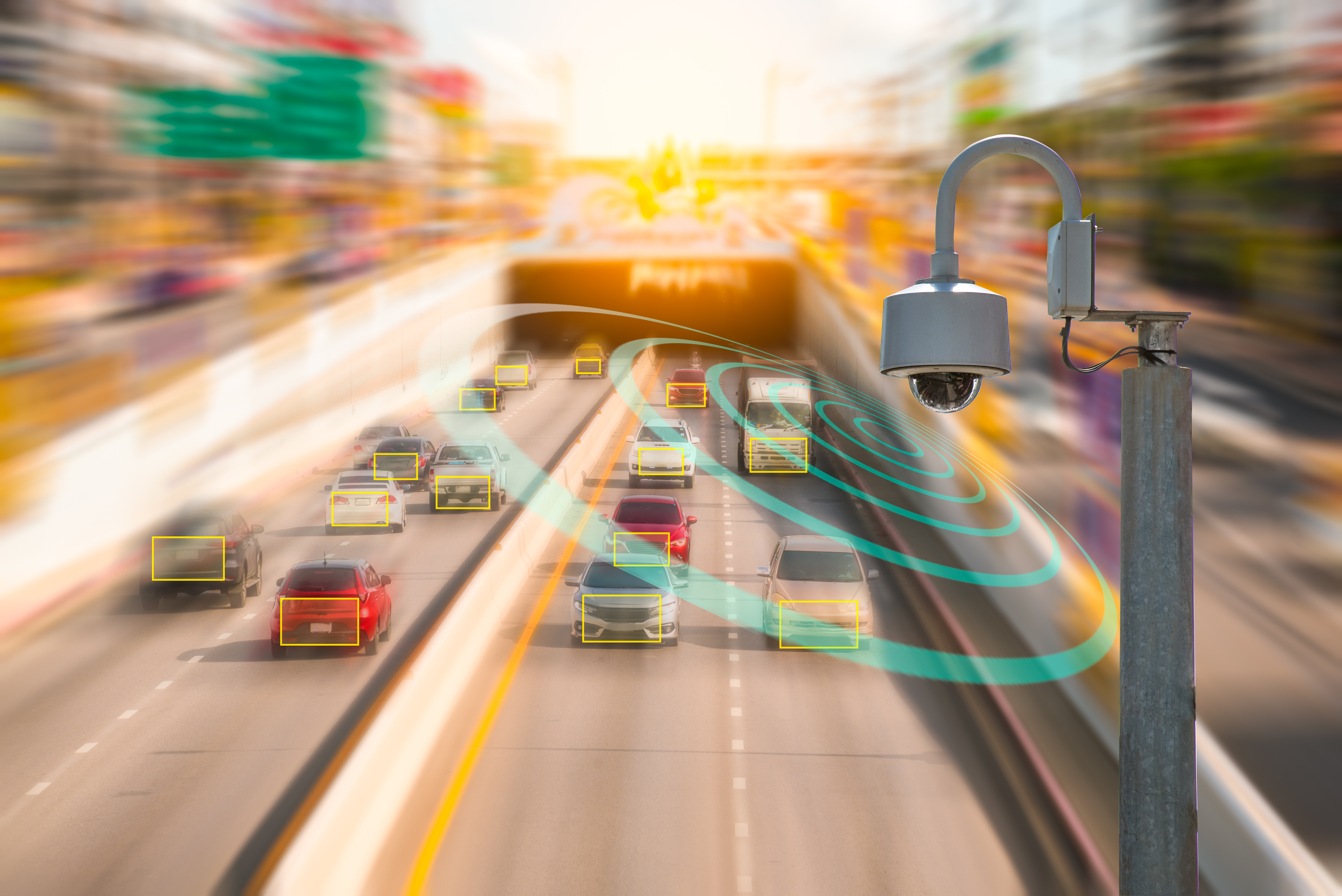
AIoT. Artificial Intelligence of Things (AIoT) integrates AI directly into connected devices and sensors, allowing them to interpret data and act locally. By advancing from passive monitoring to context-aware responses, AIoT has become vital in settings where security, resilience, and speed are essential.
In video surveillance, combining local processing with 5G connectivity enables faster, more accurate threat detection. Government and enterprise systems now analyze live feeds to spot anomalies, recognize shifts in patterns, and alert operators in real time. Local processing plus secure design minimizes exposure and helps preserve operational continuity.
Each of these sectors, as well as many others, apply edge AI technology in ways that reflect its priorities, but all share the same goal: making smarter decisions closer to the point of action. Together, these diverse applications illustrate how AI at the edge is adaptable to the specific demands of each area. What they share is a reliance on local intelligence to deliver faster, safer, and more efficient outcomes.

Thriving in an AI-Driven World
In 2025, edge AI has become a defining force in how industries operate, driving real-time insight, enabling autonomy, and reshaping expectations for performance and reliability. As adoption grows, the focus is shifting from experimentation to scale and from isolated deployments to connected ecosystems refined for greater efficiency and reliability.
The organizations that thrive will be those that treat this growth as a foundation for building resilience and competitive advantage in an increasingly AI-driven world. The next era of edge AI belongs to teams that design for both intelligence and endurance.
Categories: