
Seeing the Unseen: How Edge AI and the Jetson Platform Advance Military Threat Detection
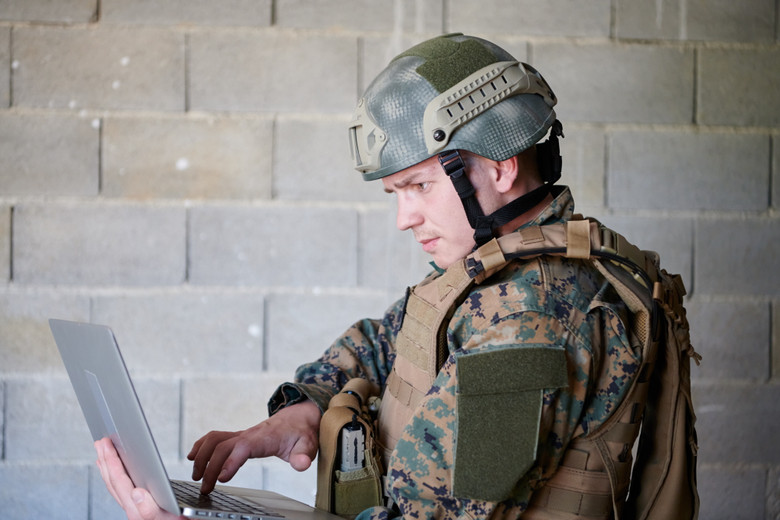
A suspicious object at an event. An aggressive movement in a crowd. A drone swarm emerging beyond the horizon.
For the U.S. Army, these moments define the difference between awareness and vulnerability. And in modern warfare—when milliseconds count—threat detection has become one of the military’s most critical capabilities.
At the 2025 AUSA Annual Meeting and Exposition, Sealevel Systems, Inc., showcased next-generation edge computing platforms, powered by NVIDIA Jetson technology, that can recognize weapons, assess surroundings, and describe scenes in real time, all without reliance on cloud connectivity.
Why Threat Detection Matters Now
Across global operations, the number and complexity of threats facing soldiers are rising exponentially. A 2025 report by Insecurity Insight revealed that between 2016 and 2024, at least 426 documented incidents involved drone-delivered explosive weapons affecting aid or health operations. In 2023 alone, drone incidents affecting aid or health care surged to over 80 compared to less than 10 in 2022. In 2024, those incidents more than tripled again, underscoring how rapidly this threat landscape is evolving.
Beyond aerial threats, ground and cyber domains are also converging. The U.S. Army’s Project Convergence and Department of Defense’s Combined Joint All-Domain Command and Control (CJADC2) initiatives emphasize sensor fusion, integrating visual, radar, and infrared data to provide a unified operational picture.
Traditional centralized systems can’t respond fast enough. When soldiers face active shooters, unknown vehicles, or fast-moving drones, AI must operate locally, analyzing imagery on the device itself. Yet, sensor fusion is only as effective as the embedded computing power available at the tactical edge. That’s where Sealevel’s Jetson-based platform enters the mission.
“All this power that’s in this unit is going to be fanless,” said Woods Little, hardware design engineer at Sealevel Systems, Inc. “No moving parts to fail.”
Edge Intelligence: Real-Time Decisions in the Field
Running advanced AI models for threat detection in the field requires exceptional processing power and efficiency. Sealevel’s new rugged IP67-rated embedded computer is designed to house NVIDIA’s AGX Orin module: a compact, high-performance processor capable of executing deep learning models directly at the edge.
“This computer is really meant for high-performance computing, especially AI workloads,” Little said. “It can do high image inferencing on the edge.”
Team Leader Martin Bowman, software engineer at Sealevel, added that the platform’s real-time capabilities go well beyond solely video processing.
“By using hardware-accelerated, standard software stacks, things like OpenCV and today’s AI frameworks, you can improve throughput and performance for real-time threat detection with multiple data streams at once,” Bowman explained. “We’re not limited to video. If you’ve got data coming in through an Ethernet port or over another interface, we can apply those same accelerated software stacks to those streams as well.”
When detecting threats in the field, multiple cameras—USB, Ethernet, and SDI—can feed live video streams into the Jetson system, which has ability to support real-time AI applications and has ample computational resources available for additional workloads.
The Jetson platform’s processing power and hardware acceleration enables it to support those applications and workloads. Sealevel’s role is limited to the hardware; software models are sold separately.
That independence from remote servers is key. By executing AI inference locally, the system ensures resilient, uninterrupted data flow from sensors to decisions—even when networks or cloud connectivity are compromised—aligning with the Army’s goal of delivering data faster to every level of command, as outlined in its 2025 Digital Transformation Strategy.
How It Benefits Defense and Public Safety
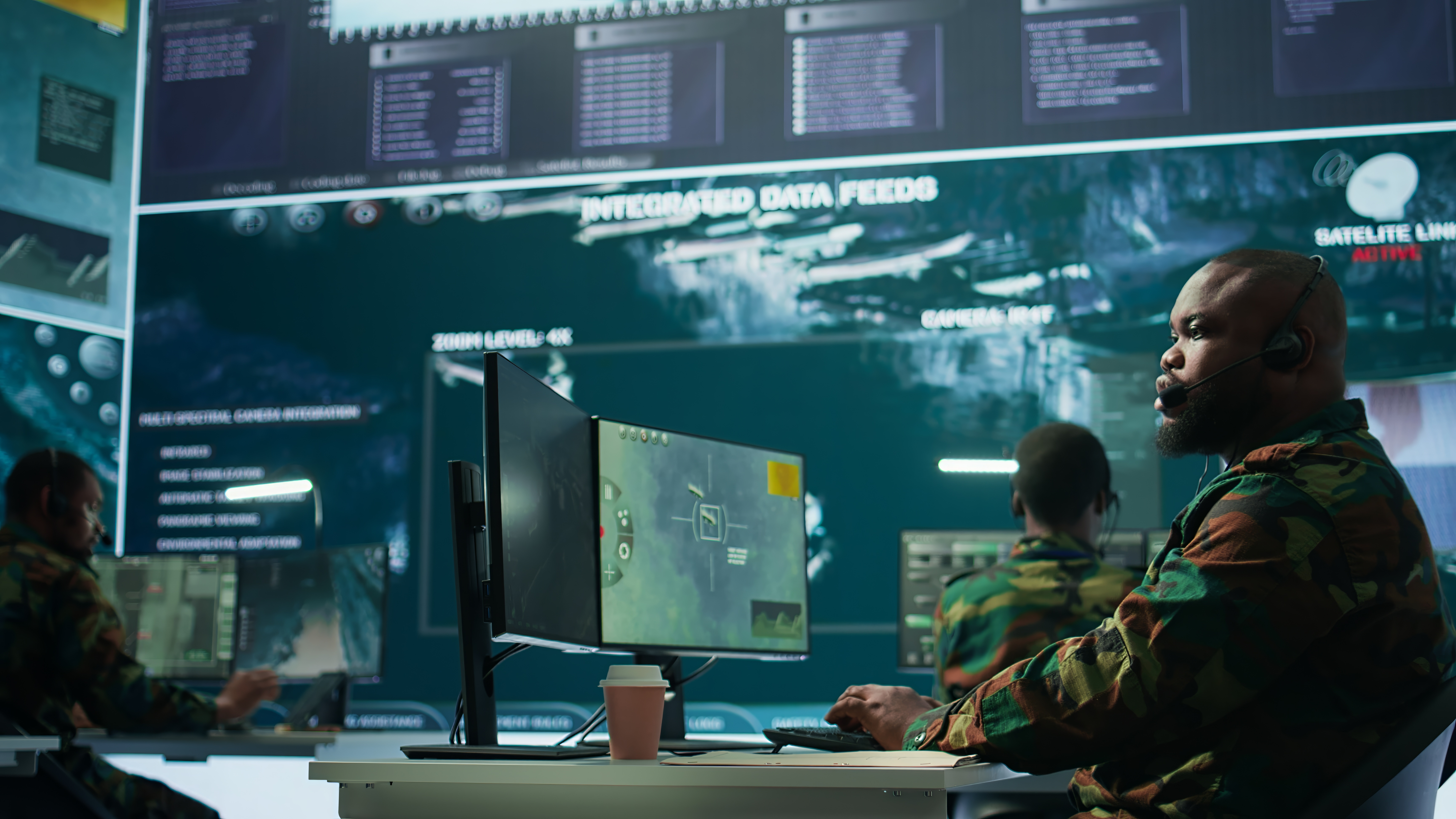
For military personnel, faster detection means faster response. Defense officials emphasize that AI is now woven into daily military operations, augmenting commanders’ decision-making and responsiveness across domains. The Pentagon has already fielded AI-enabled cameras that enhance airspace monitoring, demonstrating how vision-based recognition is being implemented to detect potential threats.
But the implications extend beyond combat. The same Jetson-enabled vision technology can support base security, disaster response, and urban safety, situations in which identifying hazards or suspicious activity early can help prevent escalation.
When deployed on helicopters, ground vehicles, or fixed installations, the system enables persistent monitoring without adding human strain. In public settings, similar AI-driven detection has already been credited with early identification of concealed weapons, cutting response times from minutes to seconds.
Ultimately, these capabilities safeguard lives through technological superiority. As threats evolve, the ability to detect them in real time before they cause harm represents a decisive edge.
The Path Forward
Whether it’s identifying hostile drones or recognizing potential threats, edge AI is redefining defense readiness.
The Jetson prototype is Sealevel’s most powerful and rugged computer yet, offering high-performance AI compute power in a fully ruggedized, IP67-rated enclosure. It positions the Made-in-America system for integration into Army and defense applications requiring autonomous perception and resilience at the edge.
While the hardware provides the foundation, the real value lies in what it enables: uninterrupted awareness in contested environments.
Categories: